How important are backlinks?
Backlinks have always been essential for a website's success because they help search engines identify your site as trustworthy and authoritative. And now, as AI begins to take the place of traditional SEO, backlinks hold the same if not greater importance for achieving the visibility your website needs to stand out.

In this article, we'll explain everything about backlinks: what they are, why they matter for both SEO and AIEO, and how they can strengthen your overall marketing strategy to help your website outshine your competitors.
What are backlinks?
Backlinks, also called inbound links or incoming links, are links from one website to another. If website B adds a link to website A, website A has gotten a backlink.
These links are extremely important because, when they point to your website, they pass what is called "link juice" that brings many benefits, helping your site gain greater visibility both for search engines and AI tools, now that AIEO is what marketers focus on.
There are different types of backlinks depending on how the link is created, its purpose, technical attributes as well as placement on the page (in-content, footer, image). There are six main types of backlinks:
- Editorial backlinks: These backlinks are earned naturally. As a marketer, you don't take direct action to acquire them, and they are usually high-quality links because they are typically featured on reputable websites that consider your content a valuable source. Although they are not obtained through an outreach strategy, having a strong content strategy is essential to earn them.
- Digital PR: On the other hand, you can also earn links on reputable websites such as news outlets (which can be especially valuable for AIEO, as Rebecca Gonzalez explained in her webinar) or through campaigns featuring newsworthy content or brand stories by paying them. Even thought this type of content is usually paid, it is often well worth the investment. It's similar to paying an influencer to promote your product, with the added benefit of a permanent link to your site and long-lasting visibility for the content.
- Guest post backlinks: Guest posting involves writing an article for another website, either under your name or as a ghostwriter, in which you can include backlinks if agreed upon. This is an effective strategy because search engines and AI tools treat these links as natural when the content is relevant and closely related to the page the link points to.
- Directory or citation links: Also known as business listing backlinks, these are links obtained from online directories or platforms that list business information such as name, address, website, and phone number. In those listings, links pointing to the company are added and can be a great way of getting backlinks.
- UGC: This can be one of the easiest ways to earn backlinks, but it can also be the most spammy if not done correctly. UGC stands for User-Generated Content and refers to backlinks obtained through user contributions such as comments, forum posts, or social media. When you are the user doing it, be careful to make it sound as natural as possible.
Besides these types, the way search engines treat backlinks depends on their technical attributes, specifically, whether they are 'follow' or 'nofollow' links. This is key because follow links are more valuable because they pass more authority to your website, helping improve visibility and credibility. Therefore, your main goal should be to earn as many follow backlinks as possible, as they signal to both search engines and AI tools that your website is trustworthy and worth appearing in results.
Why are backlinks important?
We may sound a bit repetitive here, but having backlinks pointing to your website is crucial. Backlinks matter because they provide authority signals to search engines and AI tools, indicating that your content is trustworthy, relevant, and worth recommending. Beyond authority, backlinks also play a key role in improving visibility, driving referral traffic, and helping your website stand out in increasingly competitive digital spaces. Among the main benefits of having a backlink strategy you might found:
- Backlinks increase brand awareness and online presence by mentioning your brand positively.
- They build credibility and a positive reputation when included in trustworthy sites.
- They drive website traffic and potential leads, expanding your audience reach.
- They enhance domain authority, as search engines find them a way of confirming your site's value.
- They improve search engine and AI visibility (SEO/AEO),
- They encourage faster indexing as search engines discover new pages through backlinks.
- And finally, as mentioned by David Pawlan, they support long-term marketing growth, creating a network of authoritative references that continue to benefit your site over time.
How to check backlinks of a website?
Checking how many backlinks are pointing to your page and evaluating their quality is essential for building a strong SEO/AEO strategy. By identifying and understanding your backlinks, you can identify what to improve or avoid and take the necessary steps to enhance your site's authority.
To check the backlinks of your website, you can use a variety of marketing tools that can be both free and paid such as Ahrefs, SEMrush, or even Google Search Console. These tools allow you to see:
- Which websites are linking to your pages
- The authority and relevance of those backlinks
- Anchor text used in the links
- Potential spammy or low-quality backlinks that could harm your SEO
For us, the best way to check backlinks is by using a free tool like Google Search Console (we have to pay lots of tools, so a lower budget is preferred if possible). However, it may not provide complete insights, such as a site's Domain Rating (DR). For a more in-depth analysis, paid SEO tools like Ahrefs can be better suited as they offer more a more detailed look of your backlinks profile*.
*We know that both Ahrefs and SEMRush have free backlink checker tools, but for what they offer, we prefer Google Search Console…
How to check backlinks of competitors?
Regarding competitors' backlinks, if you want to check how your competitors are doing, it's as easy as checking yours. Obviously, you can't do it with Search Console, but tools like Ahrefs or SEMrush offer an overview of your competitors' backlinks in their paid plans.
As you can see in the following screenshot from Ahrefs, you can see how many backlinks this website has and check the list of those backlinks.
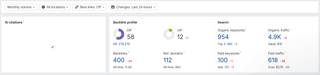
Check your tool's guide to see how to check competitors' backlinks, as every tool works differently.
How to get backlinks?
This will depend on multiple factors as the strategies and methodologies changes from country, language, and type of site. For example, in the US there has always been a tradition of free guest posting not found in Spain where all high quality backlinks are more difficult to get and come with a cost. However, we are going to explain here the most common ways to get backlinks for you to choose from or combine, focusing on the US but applicable to other countries and sectors.
Among the most popular as well as efficient ways to get backlinks we recommend:
-
Reach out strategy for guest posts: As mentioned earlier, guest posts are an excellent opportunity to earn backlinks in a natural and effective way and sometimes even for free (well, if you consider writing as unpaid work).
Start by making a list of websites with high DR and strong credibility that offer guest posting opportunities and are relevant to your site content or the product you are promoting. Be sure to write a high-quality post in which the backlink fits naturally and follows the guidelines provided by the website you're publishing on. The hardest part is finding sites that accept guest posts, but once you do, the process becomes much easier.
-
Paid strategies for backlinks: Finding websites that offer backlink opportunities is often easier when the backlink placement is paid. Many websites provide sponsored spaces where you can promote your site. Some news outlets and specialized blogs offer services to publish sponsored content that looks natural and includes a link to your site in exchange for a fee.
You can reach out directly to these websites or work with a company that specializes in this type of marketing, as there are many options available. The cost of sponsored backlinks varies depending on factors such as the country, the type of website, or the domain authority of the site; however, you can expect to pay from $100 to several thousand dollars per link, depending on the site's reach and reputation.
-
Apply a broken link building strategy: This strategy can sometimes be time-consuming and requires strong outreach skills, but it is usually free and highly effective. The concept is simple: research articles and websites that contain broken backlinks, then reach out to offer a link to your site as a replacement.
Using tools like CheckMyLinks or our own Broken Link Checker, you can quickly identify broken links on pages that discuss topics or products similar to yours. Make a list of these articles and websites, verify the broken links, and contact the site owners to suggest your content as a replacement. While this strategy can be time-consuming as we've mentioned, it often results in high-quality backlinks acquired naturally from sites that genuinely need a solution for their broken links. A win-win situation for both site owners!
-
Use forums, wikis and social media: Another way to earn free backlinks in a "natural" way is by contributing to forums, wikis, and social media platforms. For this strategy, creativity is key, as you don't want to sound spammy. By adding valuable content to forums like Quora (which AI tools love), wiki sites like Wikipedia (yes, you can add a link in relevant entries), or social media posts pointing to your site, you can gain backlinks easily and for free.
One downside is that many of these sites only offer 'nofollow' links, but that's not a problem. These links appear as natural user recommendations, and AI tools often treat them positively (something that Rebecca Gonzalez also highlighted in her webinar on AI visibility).
-
Use backlink generators: this is going to be more about quantity instead of quality and, honestly, we don't recommend this option but it can be an easy way to get backlinks when you are starting with a website. Tools like PrepostSEO or Ovdss backlink generators can quickly create multiple backlinks that may help with initial indexing and early visibility, but they are low-quality; so, you should always use these tools caution and ALWAYS combined with higher-quality backlink strategies.
How to get high quality backlinks?
As you read in the previous section, getting backlinks is quite easy if you focus on quantity rather than quality, as there are many online tools that can add free backlinks to your website in just a couple of clicks. However, quality matters more than quantity. That's why it's crucial to have high-quality backlinks pointing to your website.
Before jumping into the ways to get high-quality backlinks, you first need to take the following things into consideration to ensure the links you acquire are truly valuable:
- The website must be reliable and authoritative to share the link juice to your site. Check the DR and the overall reputation of the domain, making sure it publishes accurate, high-quality content and is trusted within its industry. A backlink from a weak or spammy website won't bring real value and can even harm your site's credibility.
- The content should be high-quality and accurate, especially if the topic is sensitive, such as health-related subjects. Even if the website where the backlink is published meets the previous requirement, the content itself must be well written, informative, and aligned with best practices, as low-quality or misleading content can reduce the value of the backlink or even damage trust.
- The content should be related to the article or site it's linking to. Even if you have a link in an amazingly written article, if the page it points to isn't relevant to the topic, both search engines and AI tools will notice. Make sure to add backlinks only where they make sense contextually and genuinely add value to the content and the reader.
- The anchor text must be relevant to the linked page. For example, if you're writing about keyboard shortcuts and the anchor text points to an article about how to choose an ergonomic mouse, the link may be somewhat related to tech but still misleading. This lack of alignment signals to search engines and AI tools that the link isn't truly relevant. The anchor text should accurately reflect the content of the page it links to and feel natural within the context.
- The link should be 'follow', if possible. This doesn't mean that a nofollow link can't be high-quality; however, a follow link passes link juice, giving extra SEO value to your site. Try to prioritize follow links when building your backlink strategy, but don't completely disregard nofollow links, as they can still drive referral traffic, improve brand visibility, and signal relevance to AI tools.
With these points in mind, you can now start building your strategy. Regarding high-quality backlinks, as mentioned in the previous section, you can earn them through all the strategies listed except for backlink generators. While generators can provide quantity, high-quality backlinks require effort, relevance, and authority whether through guest posts, broken link building, or valuable user contributions.