First-party personalization and privacy-safe signals
Do you collect data from your users? You probably do. We’re asking because while you may be managing users’ data as you always have, things have changed a lot. As regulations improve to protect data privacy and users grow increasingly frustrated with how companies use their information (for example, flooding their inboxes with newsletters), there is a growing need to both safeguard and personalize how marketers use collected data.
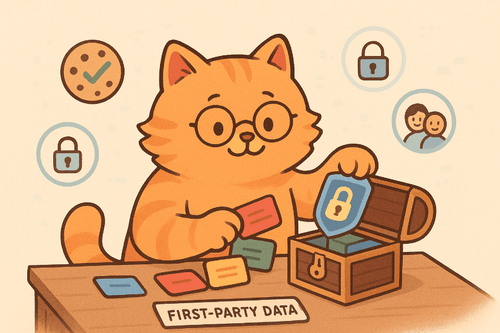
The previous trend was to gather as much user data as possible and use it to run numerous marketing campaigns - often quite spammy - like pop-ups, newsletters, and SMS messages. Nowadays, users want to avoid all this clutter. They dislike websites that bombard them with annoying pop-ups and prefer a more personalized experience when they do receive marketing messages.
This article will focus on your sites' privacy settings and how we should manage users information to help you not only adapt your privacy settings to the new trends and data protection rules, but also enhancing your marketing strategy by improving the user experience as well as building trust with your users.
But, first of all, let’s understand what we mean with first-party personalization and privacy-safe signals.
What we mean when talking about first-party personalization?
First-party data is the information a company collects directly from its audience through its own channels, such as websites, email campaigns, and mobile apps, among others. This data often includes behavioral information, such as browsing history, purchase behavior, preferences, and engagement patterns, and may also include personal information provided by users. First-party data is highly valuable because it is collected directly from your audience, making it more accurate, reliable, and privacy-compliant compared to third-party data, which is collected by companies that have no direct relationship with the individual. Companies can use first-party data to personalize marketing campaigns, improve customer experiences, and make informed business decisions - which is exactly what interests us.
When we talk about the personalization aspect of this data, we mean the ability to use the information provided by users to tailor what they receive from us. For example, it could determine what products users see on our website or the type of content suggested at the end of an article to keep them engaged on your site. Collecting this first-party information gives us insights into users’ preferences - such as which products they like on an e-commerce site, which topics they enjoy most on our blog, and how they interact with our content. With this knowledge, we can deliver a more relevant and engaging experience.
This is quite interesting because, by using it properly, we can customize how and what users receive from you. In this way, you provide users with a personalized experience, giving them exactly what they want. For example, in the case of an e-commerce business, this personalization can increase the likelihood of purchases.
In fact, this is not new. Streaming platforms have been using first-party data for years to keep users paying their monthly subscriptions and generating billions of dollars in revenue. And although Netflix’s case may seem extreme - since they have invested billions in developing big data tools to analyze and act on this information - it remains a strong success story of how first-party data can be used effectively.
Furthermore, under recent privacy laws, first-party data receives more favorable treatment compared to data not collected directly from users. This is because first-party data is gathered directly from users and is consented to through a transparent disclaimer. This aligns with regulations like the GDPR, which prioritize user consent and data transparency.
What is the difference between first-party and zero-party data?
The main difference between first-party and zero-party data lies in how the data is collected. First-party data is gathered passively from users, as it primarily consists of behavioral information, as mentioned earlier. In contrast, zero-party data is collected actively, meaning the user intentionally shares this information with you. For example, first-party data can include website browsing history and clicks, purchase history, or in-app behavior, while zero-party data includes preferences selected in a customer account or answers provided in surveys and quizzes.
Zero-party data is more difficult to obtain because, after years of receiving endless promotions and useless newsletters, users no longer trust websites that ask for their email or phone number. That’s why you need to build trust and offer not only something in return but also a personalized experience that makes them feel it’s worth sharing their data. By showing them what you can do with their first-party data, they may be more willing to share zero-party data.
And what are privacy-safe signals?
On the other hand, privacy-safe signals are pieces of information that do not explicitly collect or expose personally identifiable data. For example, first-party data can sometimes be considered a privacy-safe signal when it consists of behavioral information such as session duration, scroll depth, or on-site actions. However, it only qualifies as a privacy-safe signal when the data is anonymized, aggregated, or used without tracking users across different sites.
As people become more aware of how websites use their data, they make more cautious decisions - not ideal for marketers, but better for themselves - to prevent their information from being used. They do this by declining data-collection banners, browsing in incognito mode, or using VPNs. Privacy-safe signals help address these concerns because they are anonymized and reduce the exposure of personal data. This is important from a user perspective, as privacy-safe signals ensure that third-party cookies are blocked, the website is more compliant with stricter privacy regulations, and users receive greater privacy.
Platforms such as Google Analytics 4, Meta’s Aggregated Event Measurement, and Google’s Privacy Sandbox APIs rely on these types of privacy-preserving signals.
But when we personalize the data, is that considered privacy-safe signals?
Yes, it can be, but only if the personalization is done using privacy-compliant, first-party methods. To ensure this, users must give consent or have a clear expectation through one of the following: account login, cookie consent, or opt-in to marketing. The data can only be used within your platform, must not be shared externally, and no cross-site tracking is allowed.
These methods are technically easy to implement and can boost your brand’s trust, as they honor users’ preferences - something we will explain in more detail later.
Why is this important using first-party data with privacy-safe signals
First of all, it’s important to follow the rules when collecting and using data - no one wants to run into GDPR or CCPA issues! But even more than that, using data responsibly builds trust. Once users see that you respect their information, they’re more likely to engage with your brand - and that makes your marketing work better.
In fact, personalization isn’t just a nice-to-have anymore. A 2019 survey by Harris for Redpoint Global found that 63% of consumers expect personalization as a standard of service. People notice when their experience feels personal but not intrusive, and they reward that with loyalty and engagement.
GDPR and other privacy laws make it clear: you need to be transparent, get consent, and respect users’ control over their data. Privacy-safe signals - like anonymized behavior data - let you personalize experiences without ever exposing personal info. That means you can still recommend the right products, suggest the right content, or send the right emails, all while keeping things safe for your users.
Big platforms are taking this seriously too. Google, for example, is rolling out tools like Privacy Sandbox to help marketers use first-party data without invasive tracking. That means you can still deliver relevant experiences while keeping user privacy intact.
In short: using first-party data with privacy-safe signals is a win-win. You stay compliant, your users feel safe, and your marketing actually works better. And since most consumers now expect personalization, doing it the right way is just smart business.
Who should use first-party personalization and privacy-safe signals?
Everyone that collects first-party information through their channels. What we are explaining here is the recommended strategy based not only on marketing performance but also on what regulations prefer regarding data collection and use. Using first-party personalization combined with privacy-safe signals has lots of potential as you are compliant to the regulations and therefore you can use that information without worrying as much as you’d do with third-party data and the marketing strategy will be a lot more effective as being capable of reading that information will give you lots of hints on how to convince your audience.
How can you implement first-party personalization on your website?
Implementing first-party personalization on your platform (whether it is your website or a tool within it) will depend on the app used as CRM as well as the analysis tools you use for your data, but the steps are the following:
1. Collect first-party data with consent
Be direct and transparent about the collecting and use of data by using account sign-ups/logins, cookie banners with clear opt-in and marketing opt-ins like newsletters or notifications in which users can personalize how their data is going to be used and collected as well as show them in a clear way why you are collecting the data and how it will be used.
To collect data, use a CRM or analytics platform that supports first-party data tracking. CRMs like HubSpot, analytical tools like Google Analytics 4 (GA4) or marketing automation platforms like MailChimp or Klaviyo support first-party data tracking and are great reliable options.
2. Store and manage data securely
We've said this repeatedly, but it’s worth emphasizing: keep the data within your platform and systems, and don’t share it with third parties nor ANYONE! The data must be access-controlled and encrypted to prevent unauthorized access and protect user privacy. This is crucial.
If you have chosen a CRM, analytics platform, or marketing automation tool to collect your first-party data, make sure it supports secure storage, role-based access, and encryption both while stored and being transmitted. Regularly audit who has access to the data and remove permissions for inactive users or employees who no longer need it (don’t let them stick around like those friends who somehow stay even after your social battery has hit 0%). In other words: pick a tool that keeps data secure and encrypts it, and limit access to the right people so it can’t be read by anyone else.
Finally, ensure that users can easily access, update, or delete their data. To do so it’s smart to use a CRM or data management tool that includes user self-service options, such as account settings or preference centers. This way, users can control their own information, update their preferences, or remove data if they choose, giving them confidence that their privacy is respected and letting them personalized it whenever they want to. Providing this level of transparency and control not only keeps you compliant with privacy regulations but also builds trust and strengthens your relationship with your audience.
3. Use the data for personalization
Avoid cross-site tracking and implement on-platform personalization ONLY. For example, you can provide product or content recommendations, customized emails or newsletters, and in-app or on-site suggestions - but without relying on third-party trackers like Meta Pixel (Zuckerberg always taking care of our data) that follow users around the internet in that annoyingly persistent way.
To do so, make sure your personalization tools rely only on first-party data collected directly on your platform. Set up your CRM, analytics, or marketing automation tools to track user behavior and preferences within your own website or app, and use that information to tailor recommendations, emails, or content. This way, you can deliver personalize relevant experiences without exposing personal information to third-party trackers, keeping your users happy - and maybe even a little impressed that you respect their privacy (take that, Zuckerberg!).
4. Monitor and maintain compliance
As we've already mentioned, regulations are constantly changing - this whole data collection and management thing is still pretty new, and authorities are figuring out ways to make sure companies don’t take advantage of it and harm users. That’s why we recommend not only following all the steps we’ve outlined but also staying updated on what the latest laws and regulations say to maintain compliance.
This isn’t a one-day job that you do once and forget about. It’s something you need to check and improve constantly. Review your data collection practices, consent mechanisms, and privacy policies regularly to make sure everything is still in line with current rules.
And, of course, don’t forget to test and optimize accordingly. Keep an eye on what’s working, tweak what isn’t, and make sure your personalization strategies stay effective - all while respecting users’ privacy. Doing this keeps your users happy, your marketing sharp, and your brand out of trouble.
What are the best first-party personalization tools for websites?
When it comes to which apps to use, there are plenty out there, but not every tool plays nice with privacy-safe signals.
We've already mentioned some solid options like HubSpot for analytics or MailChimp to manage contacts and create newsletter campaigns. These are great tools as they allow personalization and are privacy-safe.
But here’s the thing: instead of just giving you a list, we’d rather encourage you to dig deep into what each tool actually offers in terms of data protection. There might be a tool out there that’s even better than the ones we've used - and it might not end up on any list. That’s why we prefer to give you the freedom to choose the app you want, but make sure you read how they manage the data, how they store it, and what kind of consent mechanisms they provide. And if they don’t give clear info? Skip them. Don’t rely on ChatGPT for this - READ THE HELL out of their manuals! Your users’ privacy depends on it.
It must be said that, even though you use the best app, you have to know how to analyze that data and have a good understanding in creating a good strategy. If you have high-quality data, but don’t understand it, even the best strategy will be a flop.
In other words, choose tools that:
- Respect privacy and support anonymized or first-party data only
- Give you full control over the data
- Don’t share the data to third parties
- Integrate well with your existing website or CRM
- Provide clear documentation about compliance
Use these tools as your foundation, but remember: the secret juice is knowing your data and applying it smartly. That’s what makes personalization actually work.
Benefits of combining first-party data with privacy-safe signals
After all these definitions and instructions, you probably already have an idea that combining first-party data with privacy-safe signals can bring a lot of benefits - but what exactly? Here are the main ones:
-
You can build trust with your clients. As we’ve already mentioned, respecting users’ privacy and handling their data responsibly shows that you care about them, not just your marketing goals. Studies show that users tend to trust more when privacy-first personalization is available, winning customer trust and loyalty. Look at what CMSWire said about this:
"Eighty-one percent of customers prefer companies that offer personalized experiences, and 63% of consumers are annoyed with generic ads. Businesses that offer personalized experiences see a 10-15% increase in revenue compared to brands that don't."
-
You can customize your campaigns to get better results. By using accurate first-party data and privacy-safe signals, you can tailor your messages, recommendations, and offers to each user. The more relevant your campaigns, the higher the engagement and conversion rates. It’s pure logic: if you are looking for a coat and the website suggests you a similar but cheaper one, you will end up buying something.
-
Website’s user experience is improved. When personalization is done correctly, users see content and recommendations that actually matter to them, instead of irrelevant pop-ups or spammy suggestions. This keeps users happy, engaged, and coming back for more as you don’t have an annoying website that everyone hates to visit.
-
You can have created accurate customer profiles. Combining behavioral data and explicit preferences lets you build detailed, accurate profiles of your users. These profiles help you understand your audience better, make smarter business decisions, and plan future campaigns with confidence. For example, if you have hundreds of users interested in AI, you can send them a newsletter if a new AI-related article is published in your website - but REMEMBER, you can only send that if they've already accepted and personalized their preferences ;).
Speaking of privacy compliance, make sure your cookie banner is actually legal. Most aren't. Check out our guide on cookie banner compliance to learn what you're probably doing wrong and how to fix it.